
Every family has one: the person who reads presidential biographies on vacation, watches every war documentary twice and can tell you exactly what happened at Trenton on the day after Christmas in 1776. Shopping for a history lover can be surprisingly hard. They already own the books, and gadgets miss the point. What they usually do not have is a piece of history on the wall: a famous painting or an original archival photograph, framed well enough to hang in a study or living room for decades.
This gift guide gathers some of the most meaningful historical works in our catalog, organized by the kind of history buff you are shopping for. Each one is a real painting or photograph with a documented story, which is half the gift: it comes with something to talk about.
What a history lover usually does not have is a piece of history on the wall.
For the World War II reader
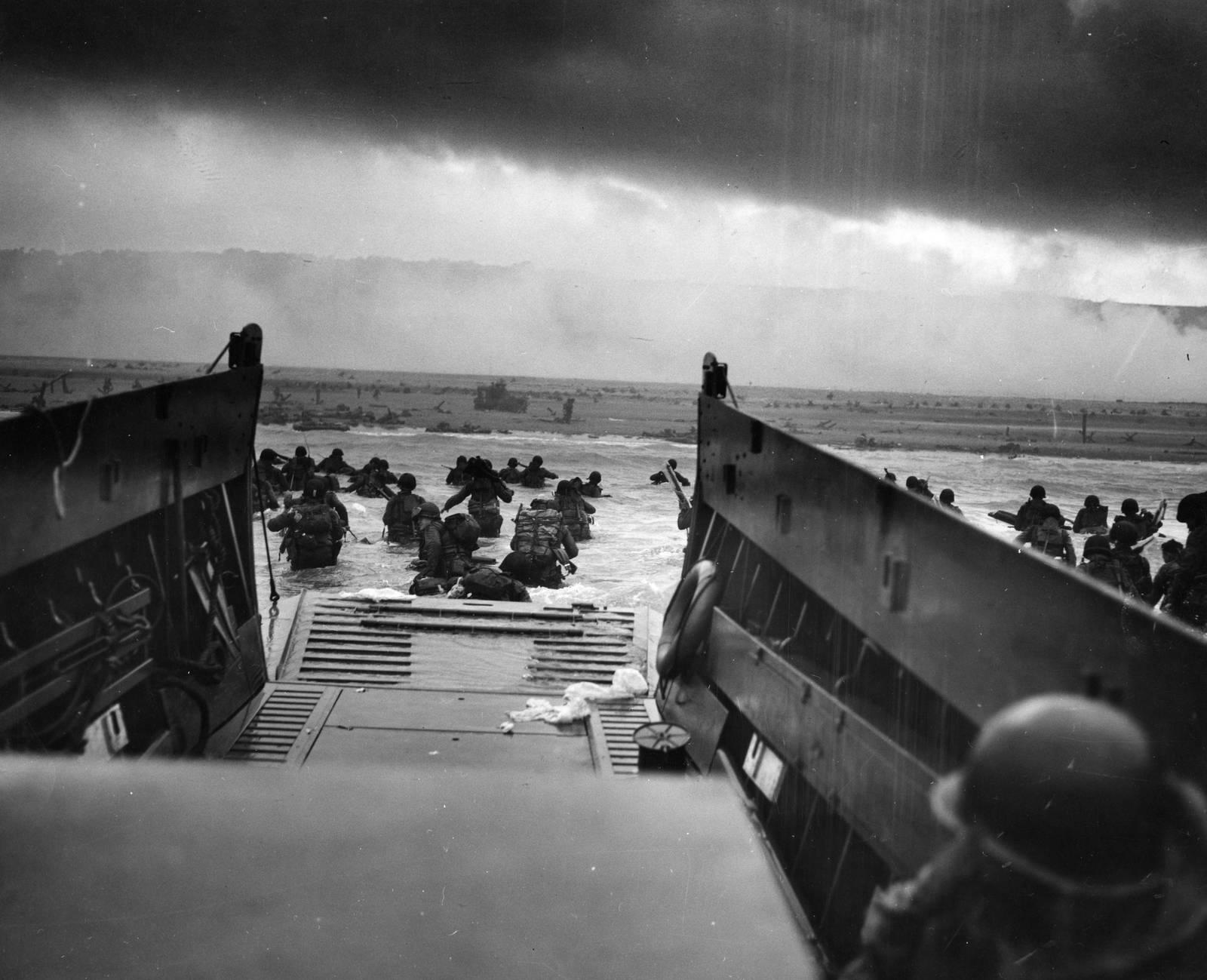
Few photographs of the war are as recognizable as Into the Jaws of Death. Robert F. Sargent, a U.S. Coast Guard photographer, took it from a landing craft on the morning of June 6, 1944, as American soldiers waded toward Omaha Beach. It is a picture of enormous scale and quiet dread, and it hangs well in a study or den, where it invites a long look rather than a passing glance.
Pair it with Eisenhower with the 101st Airborne, taken the evening before at Greenham Common in England, as General Dwight D. Eisenhower spoke with paratroopers who were about to fly into Normandy. Together the two photographs tell the story of D-Day from its eve to its morning. For someone whose interest runs to the Battle of the Bulge, the official Army photograph of the 101st Airborne leaving Bastogne in January 1945, after the siege, completes the arc. Browse more in our World War II photographs collection.
For the Founding Fathers fan
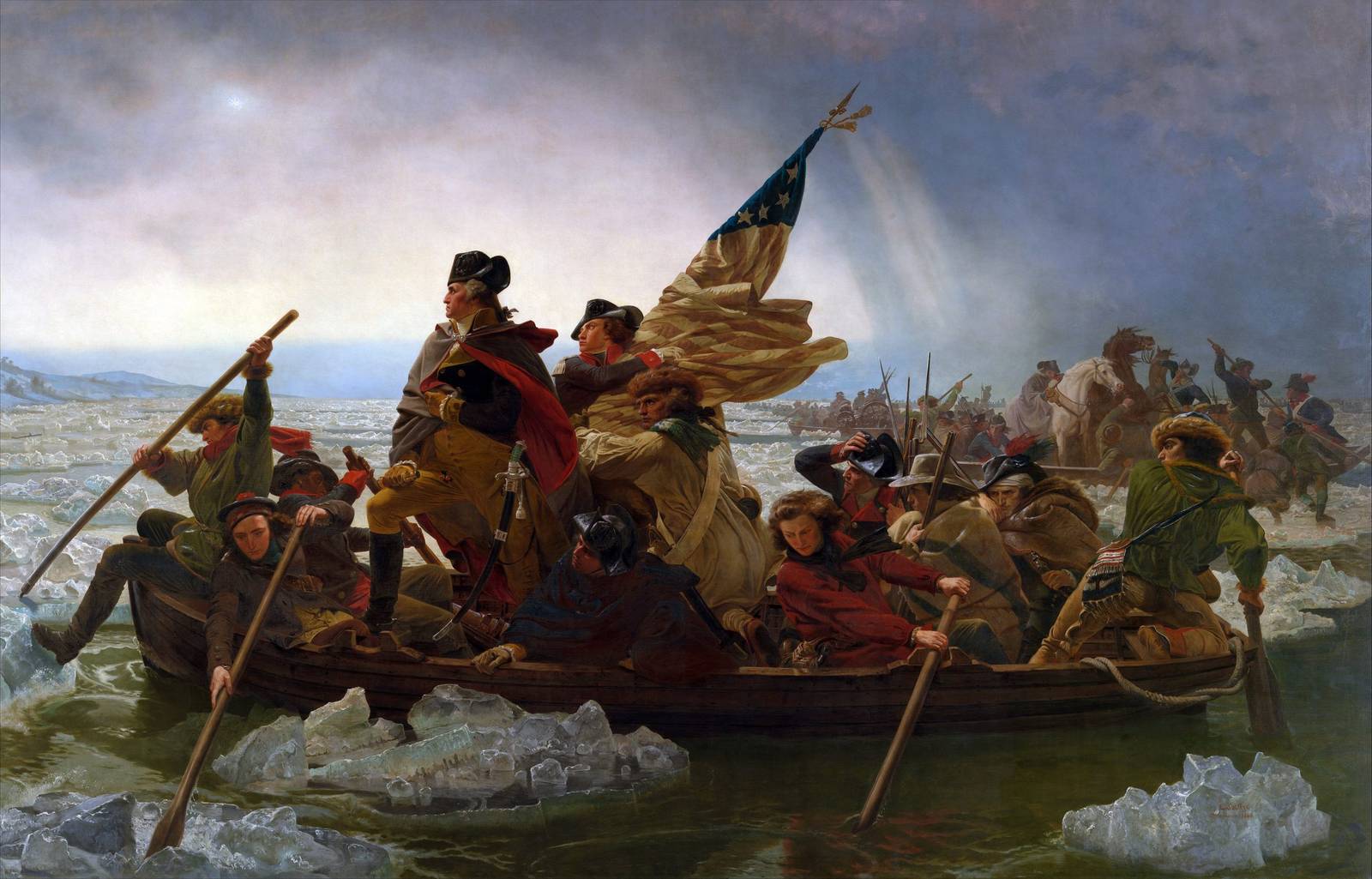
Emanuel Leutze’s Washington Crossing the Delaware is probably the most famous American history painting ever made. Leutze, a German-born artist raised in the United States, painted it in Düsseldorf in 1851 to celebrate Washington’s surprise crossing of the icy river on the night of December 25–26, 1776, before the Battle of Trenton. The original at the Met is enormous, more than twenty feet wide, and historians have happily pointed out its liberties, from the flag (the Stars and Stripes design shown was not adopted until 1777) to the boat itself. None of that has dimmed its power. It is the right gift for someone who loves the drama of the Revolution.
For a quieter wall, consider a portrait. Gilbert Stuart, the leading portraitist of the early republic, painted John Adams, the second president, around 1800–15, and the Scottish painter David Martin’s Benjamin Franklin of 1767, painted in London while Franklin was living there as an agent for the colonies, shows him reading at his desk. Either suits a home office or library. More portraits are in our Founding Fathers and presidents collection.
Each one is a real painting or photograph with a documented story, which is half the gift.
For the Civil War historian
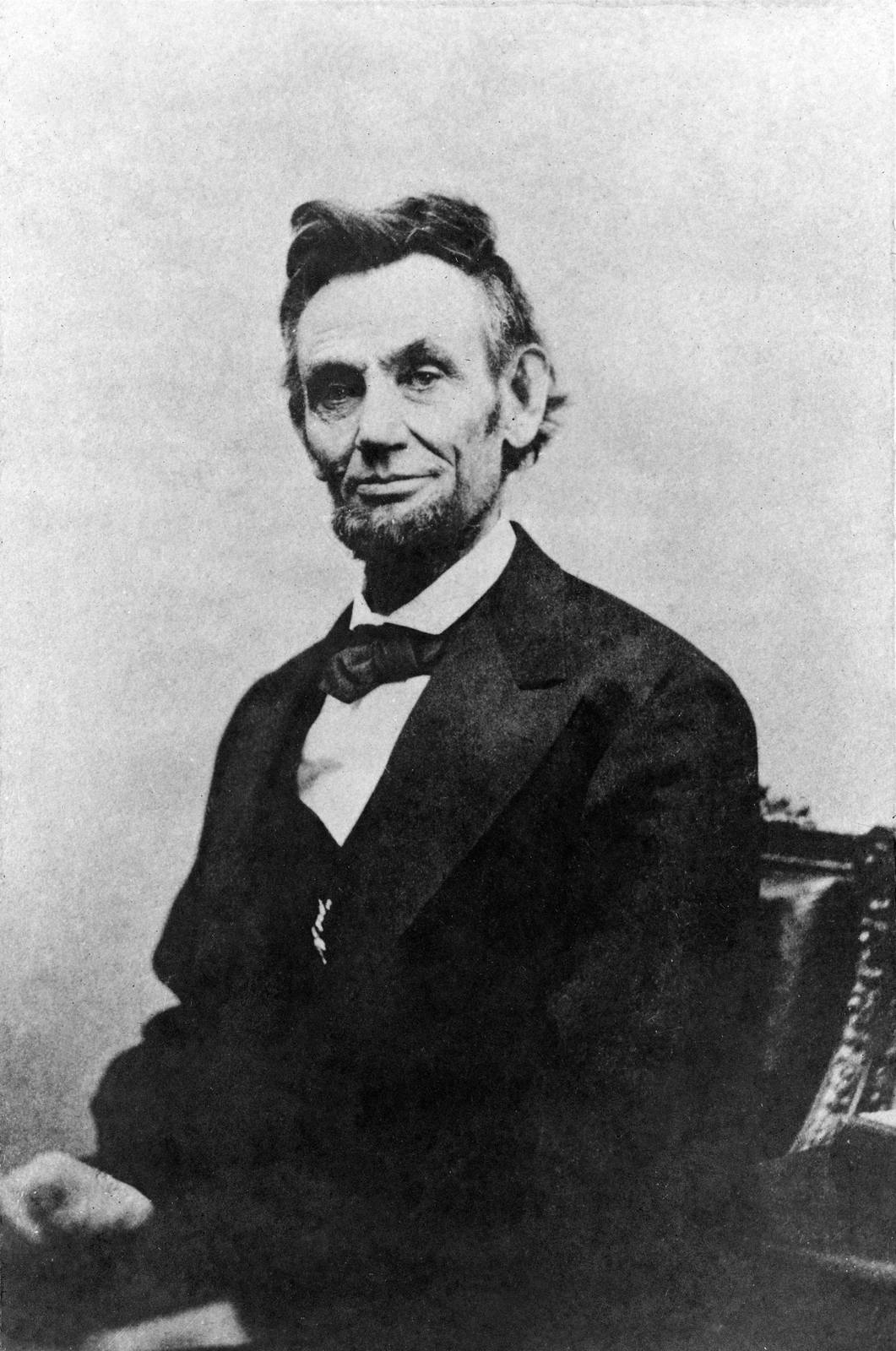
Alexander Gardner’s cracked-plate portrait of Abraham Lincoln, made in Washington in February 1865, is one of the last studio photographs of the president, taken roughly two months before his assassination. The glass negative cracked, and the break left a line running across the top of the image. Many viewers find it impossible not to read that flaw as a premonition, which makes it one of the most haunting images in American photography.
Its natural companion is Ulysses S. Grant at Cold Harbor, taken at his headquarters in Virginia in June 1864 by Mathew Brady’s studio. For a sea-minded historian, Édouard Manet’s Battle of the Kearsarge and the Alabama, painted in 1864, shows the Union warship sinking the Confederate raider off Cherbourg, France, that June. Manet did not witness the battle and worked from news reports, but his painting became one of the war’s most striking images, and it is now in the Philadelphia Museum of Art.
For the ancient Rome devotee
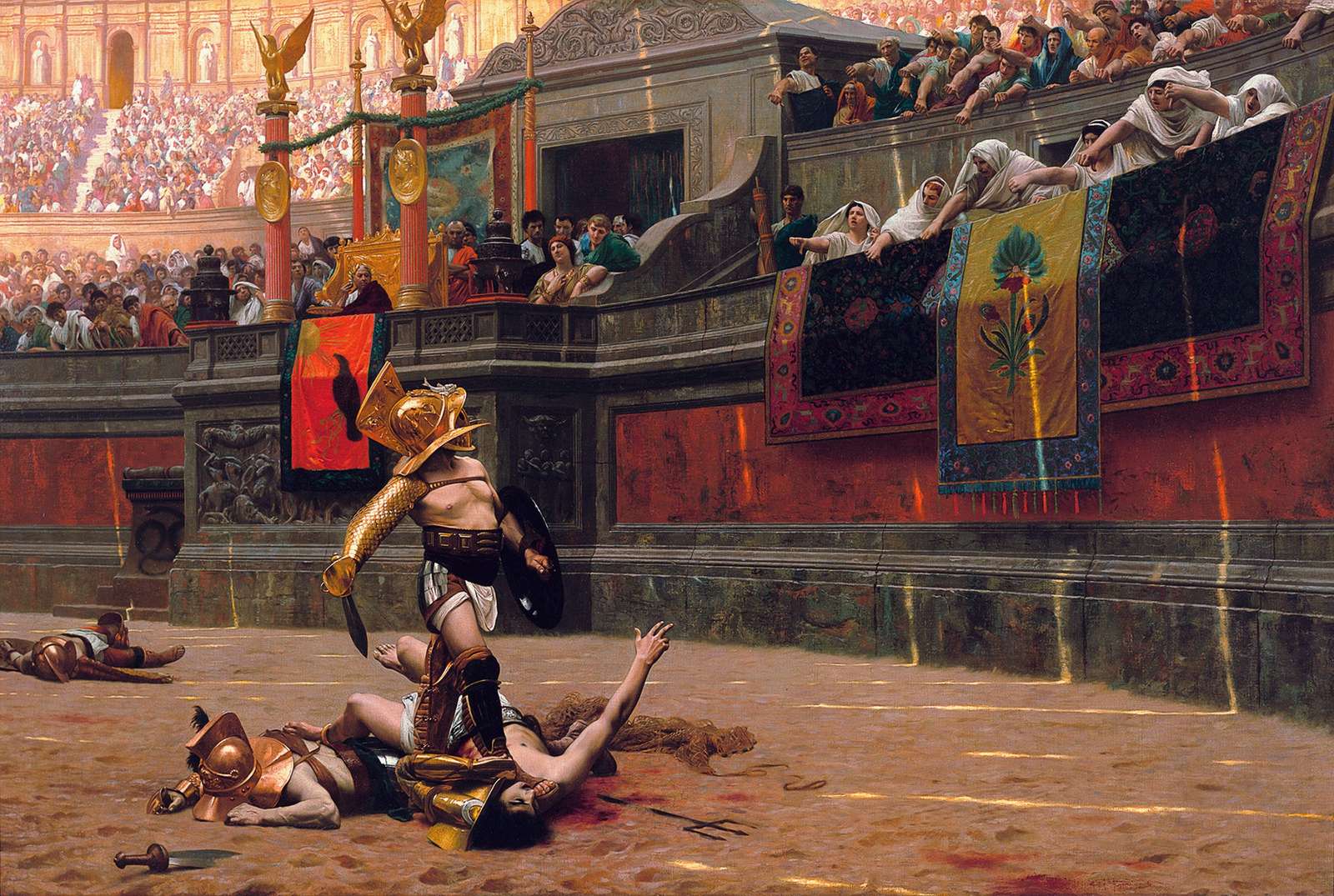
The French painter Jean-Léon Gérôme did more than almost anyone to shape how we picture ancient Rome. His Pollice Verso of 1872, whose Latin title means “with a turned thumb,” shows a victorious gladiator standing over his fallen opponent in the Colosseum, looking up to the crowd for a verdict. Historians still argue about what the Roman thumb gesture actually meant, but Gérôme’s version fixed “thumbs down” in the popular imagination. His Chariot Race of 1876, at the Art Institute of Chicago, sweeps around the Circus Maximus with the Palatine Hill behind. See more in our gladiator and chariot race paintings.
For the history-of-science buff
History is not only battles and presidents. The photographer Ferdinand Schmutzer’s portrait of Albert Einstein, taken during a lecture in Vienna in 1921, the year he was awarded the Nobel Prize in Physics, shows the physicist at the height of his fame. And a 1912 photograph of Marie Curie in her Paris laboratory honors the first person to win two Nobel Prizes, in physics in 1903 and chemistry in 1911. Both are in our famous scientists portraits collection and look terrific in a home office or a student’s first apartment.
A framed photograph of a real moment is a gift that keeps telling its story.
Gift-giving tips
- Match the room, not just the era. Black-and-white photographs like the D-Day and Lincoln images suit modern rooms and pair well with black frames; oil paintings like Leutze and Gérôme glow in gold or warm wood.
- Think in pairs. D-Day eve and D-Day morning, Lincoln and Grant, or Einstein and Curie make satisfying sets that tell a bigger story than one image alone.
- Pick a size with confidence. Each work is framed and ready to hang in up to three sizes, Small at $195, Medium at $295 and Large at $395, printed at its true proportions without cropping. If you are unsure, our guide to choosing a size and frame walks through it.
- Order early. Every print is made to order, so give yourself time before the holidays. Shipping is free, and returns are accepted within 30 days.
For more ideas across every interest, see our holiday gift guide to framed art prints, or browse the full America and World War II collections.