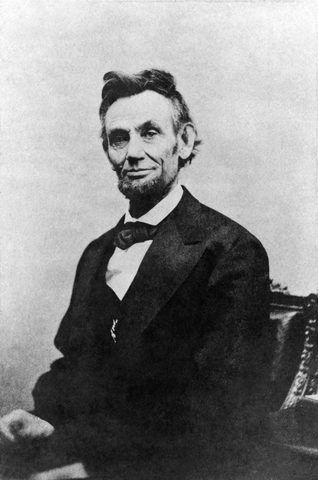
Cracked-plate Lincoln
Alexander Gardner, 1865
About this work
Alexander Gardner photographed Abraham Lincoln at his studio on Seventh Street in Washington on February 5, 1865, about two months before the assassination. It was the last formal studio portrait of Lincoln. The glass-plate negative cracked, and Gardner made a single print before discarding it; the crack runs across the top of the image. That flaw has since been read as an eerie foreshadowing of his death in April 1865. The sitting came a month before his second inauguration, as the Civil War was drawing to a close. The surviving print is an albumen silver print, 45 × 38.6 cm, in the collection of the Smithsonian's National Portrait Gallery in Washington. Lincoln was the most photographed American of the nineteenth century, with at least 130 known photographs, many of them by Gardner and Mathew Brady.
Sources: Wikipedia: Photographs of Abraham Lincoln · National Portrait Gallery
Print facts
- Native resolution
- 3,481 × 5,252 px
- Sharp at 150 ppi up to
- 23 × 35 in
- Sizes
- Small (13 × 20 in) · $100 · 263 ppi
Medium (16 × 24 in) · $150 · 218 ppi
Large (24 × 36 in) · $300 · 145 ppi - Price includes
- Frame and US shipping · 14–21 days · 30-day returns
FAQ
Where can I buy a framed print of Cracked-plate Lincoln?
Here. Cracked-plate Lincoln is available as a framed print in three sizes: Small (13 × 20 in) for $100, Medium (16 × 24 in) for $150 and Large (24 × 36 in) for $300. Prices include the frame and US shipping; delivery takes 14–21 days, with 30-day returns.
What size works best for Cracked-plate Lincoln?
The file is 3,481 × 5,252 px. Medium (16 × 24 in) is the largest size that prints at 150 ppi or more (218 ppi), the sharpest choice for close viewing; Large (24 × 36 in) prints at 145 ppi, fine from a few feet away but softer up close.
Is it legal to print Cracked-plate Lincoln?
Yes. Alexander Gardner made the photograph in 1865; any copyright in it expired long ago, and it is in the public domain. A faithful reproduction of a public-domain photograph does not create a new copyright in the United States.