
A framed print is one of the few gifts that has a job after the wrapping comes off. It goes on a wall and stays in daily life: over a sofa, in a hallway, beside a desk. That is also why it can feel harder to choose than a sweater. The picture has to belong to someone, not merely look expensive in a listing. FrameAnyPhoto prints arrive framed and ready to hang, in three sizes at $195, $295 and $395. The better question is not which image is most famous, but which one a particular person will still want to see in February.
The four works below are a start, not a complete list. Each is a public work in the collection, printed from a museum or library record, and each points toward a larger shelf you can browse if the first idea is close but not quite right.
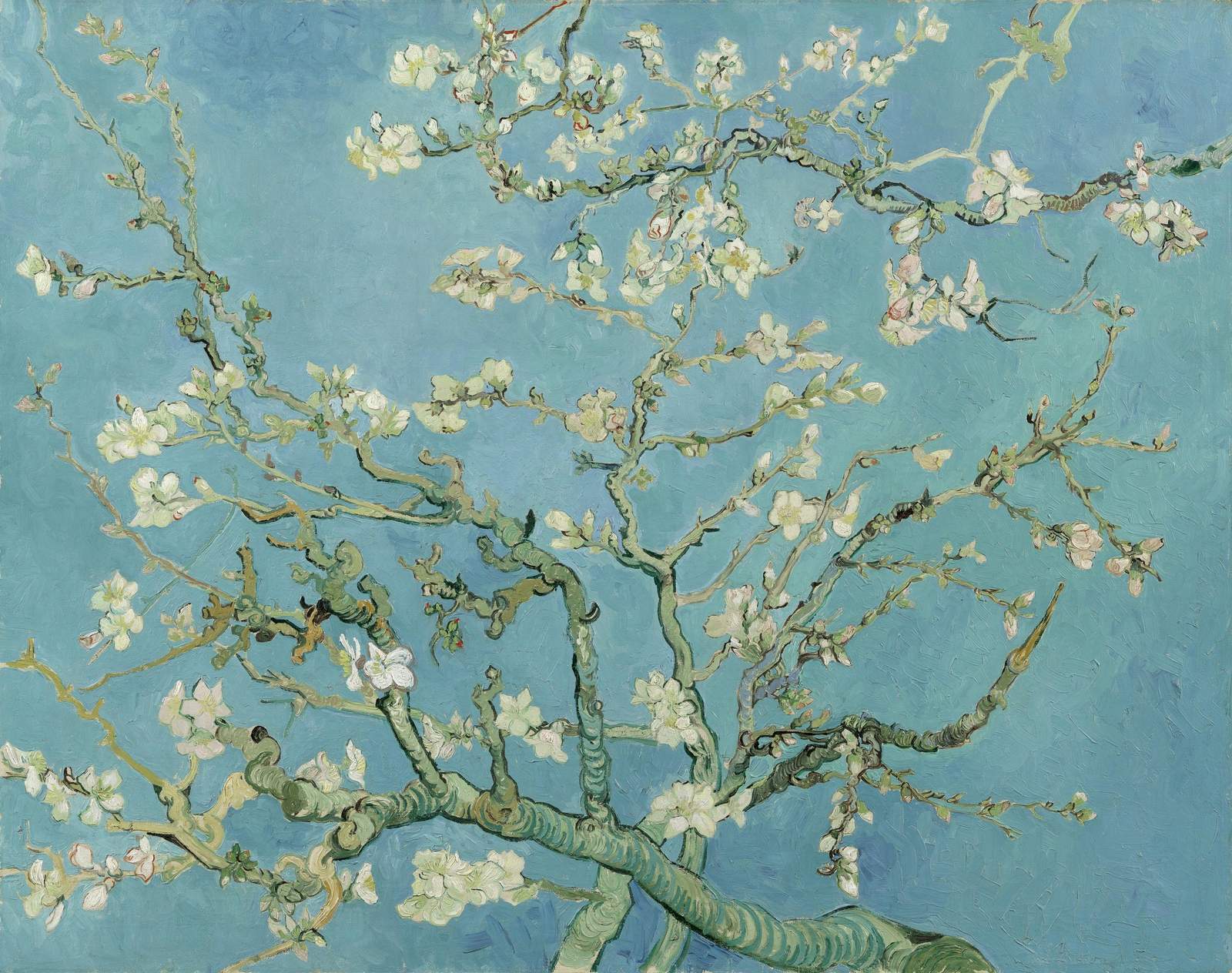
Start with a painting that was itself a gift
Vincent van Gogh painted Almond Blossom in 1890 for his newborn nephew, Vincent Willem, the son of his brother Theo and sister-in-law Jo. The Van Gogh Museum records that the child was born on 31 January 1890 and named after his uncle, and that Vincent began the canvas at once. Almond trees flower early, so the subject already carried an idea of new life. The museum also notes the unusual viewpoint: branches seen from below and close up, a way of looking Van Gogh had learned from Japanese prints.
That history is useful at this time of year without turning the picture into a lecture. You are giving someone a study of pale blossom against a blue sky, made as a present, and still in the museum the family later founded. It is a generous image for a new home, a new child, or anyone who would rather live with a beginning than with a monument. More of his work is gathered on the Vincent van Gogh page, and among the masterpieces in the collection.
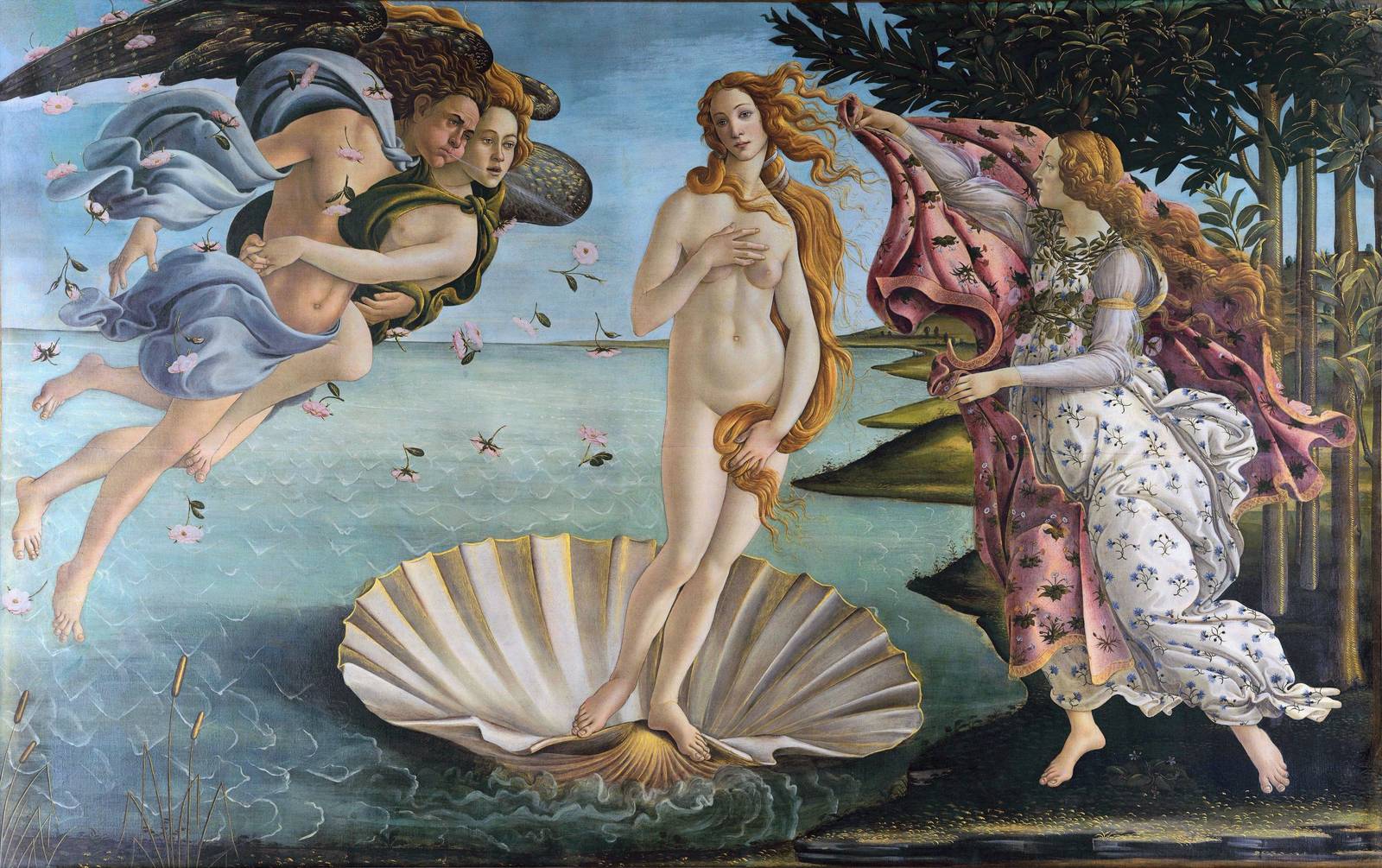
A masterpiece people already know how to look at
Some gifts work because the recipient does not need an introduction. Sandro Botticelli’s Birth of Venus, painted in Florence around 1485 and now in the Uffizi, is that kind of picture. The museum describes the scene as the goddess arriving at the island of Cyprus, standing on a giant scallop shell and blown toward shore by the winds, where a young woman holds out a cloak covered in flowers. It is tempera on canvas, unusually large and unusually clear. You can take in the arrival from across a room.
That clarity is the practical point. A well-known masterpiece can fail as a gift if it is mostly a name. This one still behaves like a picture: a figure, a shoreline, a movement from sea to land. It suits a living room or an entry wall, anywhere a guest will actually stop. If the person you are buying for already has a favorite painter, start instead from that artist’s page in the collection rather than from a greatest-hits list.
The better gift is not the most famous picture, but the one someone will still want to see in February.
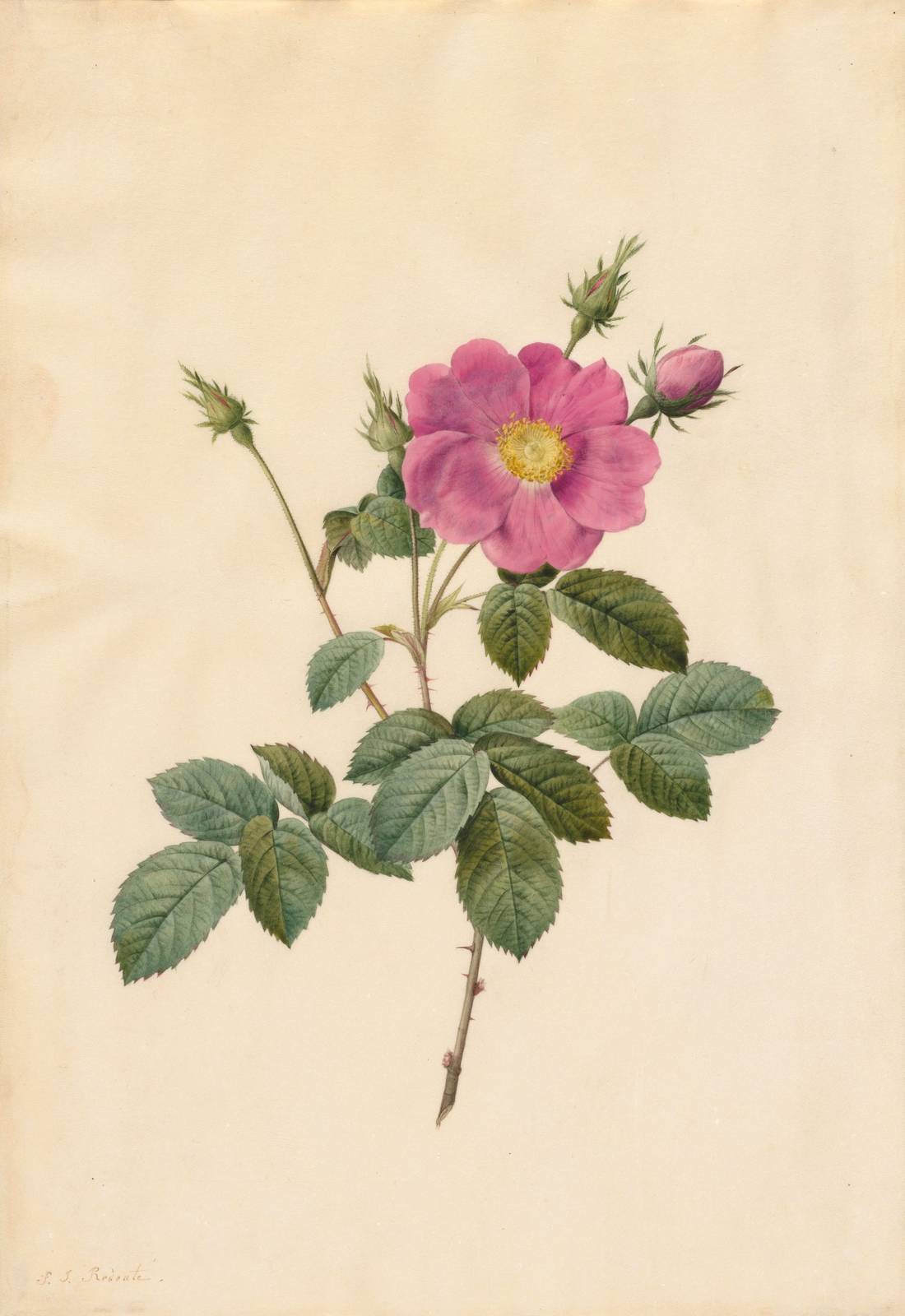
Something quieter, and just as lasting
Not every wall wants a myth or a famous sky. Pierre-Joseph Redouté’s Cabbage Rose (Rosa Centifolia Simplex), painted on vellum between 1817 and 1824, is a single flower observed with almost no setting at all. It is in the Cleveland Museum of Art, which shares the sheet as open access. The rose fills the page; the pleasure is in the weight of the bloom and the care taken with each petal.
Botanical prints are often the right gift for a smaller room, a kitchen, a hallway, or a person who already lives with too many dramatic pictures. They also age well, because they were made to be looked at slowly. If a rose is not the flower, the botanical collection and the works of Pierre-Joseph Redouté offer other plates from the same tradition.
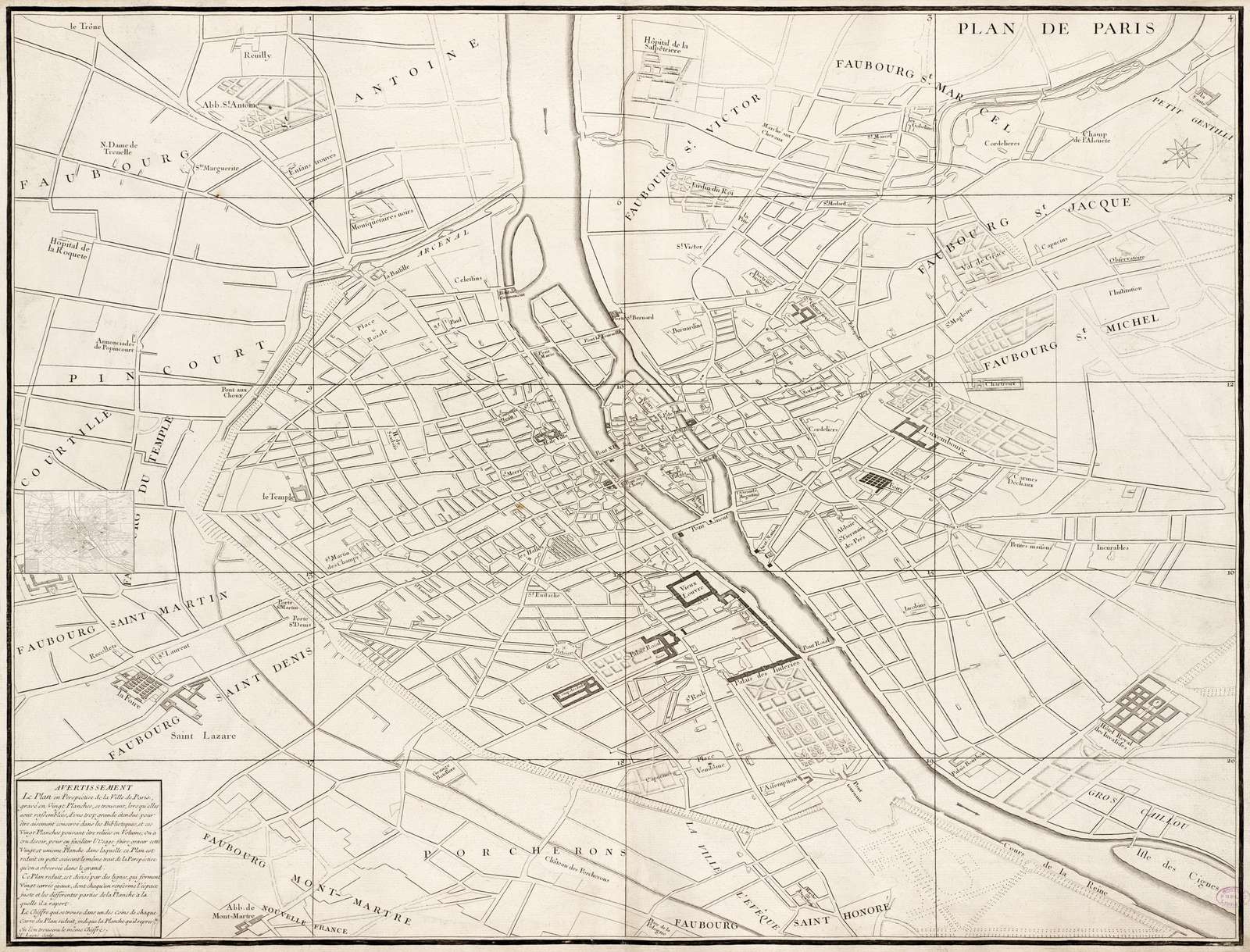
A map of a place they love
A map is a gift with a destination already in it. The Turgot Map of Paris, published in 1739, was commissioned by Michel-Étienne Turgot, then at the head of the Paris municipality, drawn by Louis Bretez and engraved by Claude Lucas. The Bibliothèque nationale de France describes a bird’s-eye plan made with unusual fidelity, street by street and building by building. It is less a diagram than a portrait of a city, and it rewards the kind of looking a wall allows: you can come back later and find another courtyard.
Give a map to someone who has a city, a coast or a country they return to in conversation. Paris is only one option. The vintage maps shelf includes other city plans and world maps, among them Petrus Plancius’s 1594 Orbis Terrarum and the later double-hemisphere sheets gathered under antique world maps.
Or a poster that wants to go somewhere
If the person in mind is less a museum-goer than a traveler, a mid-century park poster can be the more natural gift. C. Don Powell’s Yellowstone National Park, Ranger Naturalist Service, issued around 1938 for the National Park Service, shows Old Faithful in eruption. The Library of Congress holds the screenprint in its WPA poster collection. It is bold, easy to read at a distance, and unembarrassed about pleasure. The same shelf includes the Grand Canyon poster of the same period and other travel posters.
Space photographs belong in the same practical category: they are gifts for people who already know what they love. Earthrise, made on Apollo 8, is the most famous of them, and the space and Apollo moon landing collections hold the launches, moonwalks and Earth views around it.
How to choose from here
Once you have a direction, match it to a wall rather than to a season. A wide masterpiece or a city map wants a long stretch of plaster; a botanical plate or a poster can take a narrower place and still hold it. The print arrives framed, so the decision is really about the image and the size, not about a later trip to a framer in the week after the holiday.
If none of these four is quite right, stay in the same neighborhood of the catalog rather than starting over. A Van Gogh can lead to another van Gogh; a Paris map, to another chart; a rose, to a lily. The point of a gift like this is not to close a year with the heaviest possible name. It is to put a picture on a wall that will still be worth facing when the year is ordinary again.