
Choosing a framed print usually starts with the picture. But once you have found the painting or photograph you love, two practical questions decide whether it will look right on your wall: how big it should be, and which frame it should wear. This guide walks through both, using the three sizes and two frames FrameAnyPhoto offers, along with a few simple rules of thumb that interior designers and picture framers have relied on for years.
The three sizes, and why the inches change
Every FrameAnyPhoto print comes in up to three sizes: Small at $195, Medium at $295 and Large at $395. Each arrives framed and ready to hang, with free shipping in the US.
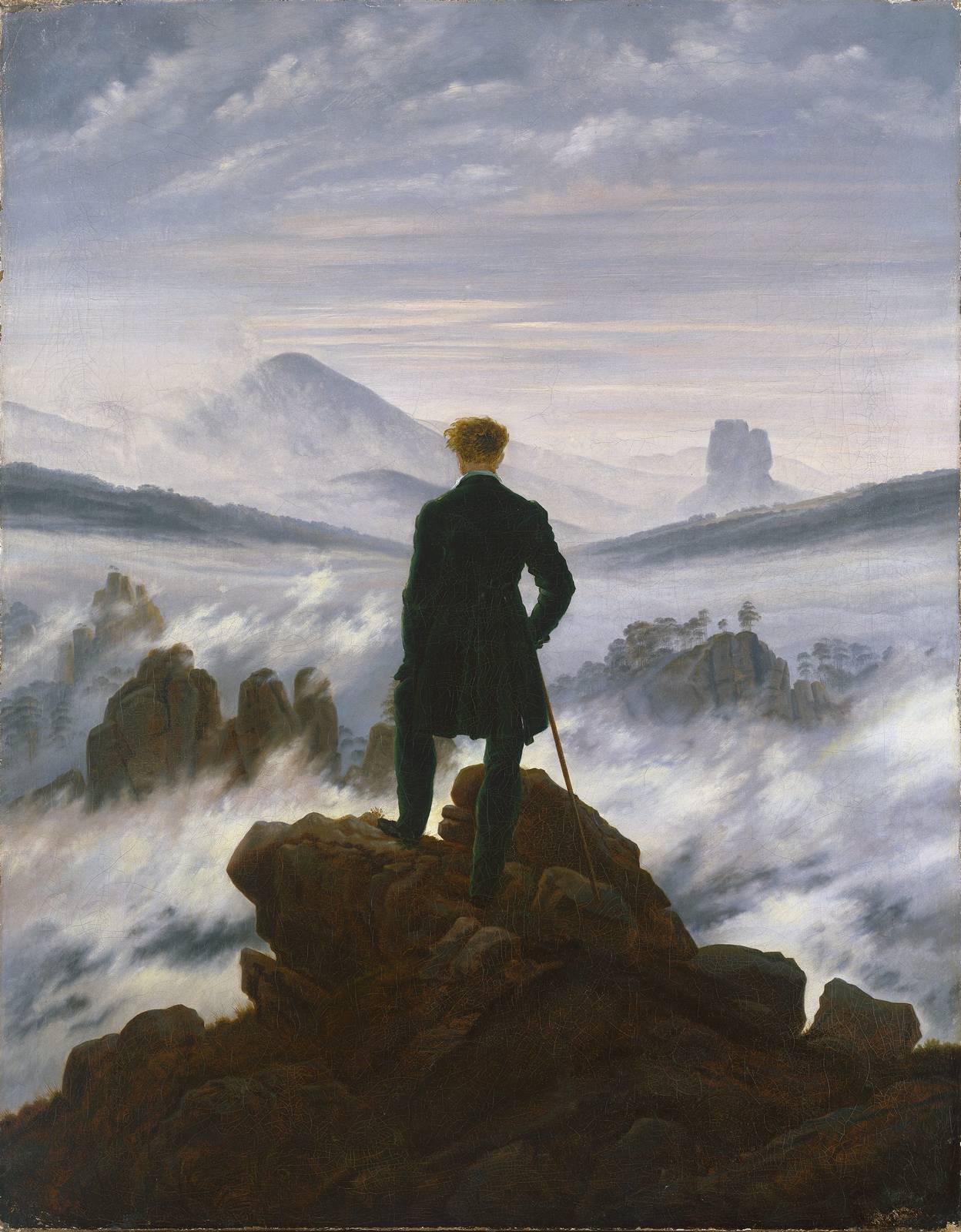
The exact dimensions depend on the artwork, because we never crop a painting to fit a standard frame. A portrait-shaped work such as Caspar David Friedrich’s Wanderer above the Sea of Fog (c. 1818) comes in at 16 × 20, 19 × 24 and 28 × 36 inches. A wide one such as Canaletto’s St. Paul’s Cathedral (c. 1754) turns sideways to roughly 20 × 17, 24 × 20 and 36 × 30 inches. Each work page lists the measurements for every size, so you can check them against your wall before you order.
Occasionally a work is offered in only one or two sizes. That happens when the museum’s source image does not have enough detail to print sharply at a larger size. Albert Bierstadt’s Seal Rock, California, for example, is offered in Small and Medium. We would rather leave out a size than sell a soft print.
We never crop a painting to fit a standard frame; the size follows the art.
How big should your print be?
The most common mistake with wall art is choosing something too small. A few rules of thumb help:
- Above furniture, aim for about two-thirds of the width. Over a sofa, bed, sideboard or console, a picture roughly two-thirds the width of the furniture beneath it looks deliberate and balanced. On a typical sofa, that usually points to the Large size, or to a pair of Mediums.
- Hang it at eye level. Many galleries hang pictures so that their center sits roughly 57 to 60 inches from the floor. Above furniture, leave a gap of several inches between the furniture and the bottom of the frame.
- On a bare wall, think about viewing distance. A picture seen across a living room can be larger than one seen up close in a hallway or beside a desk.
- Small spaces still like presence. In a powder room, entryway or narrow wall between windows, a Small print fills the space without crowding it.
A quick test before you order: cut a piece of paper or cardboard to the size listed on the work page, tape it to the wall, and live with it for a day. It is a low-tech trick, and it settles the question faster than any calculation.
Which size suits which kind of image?
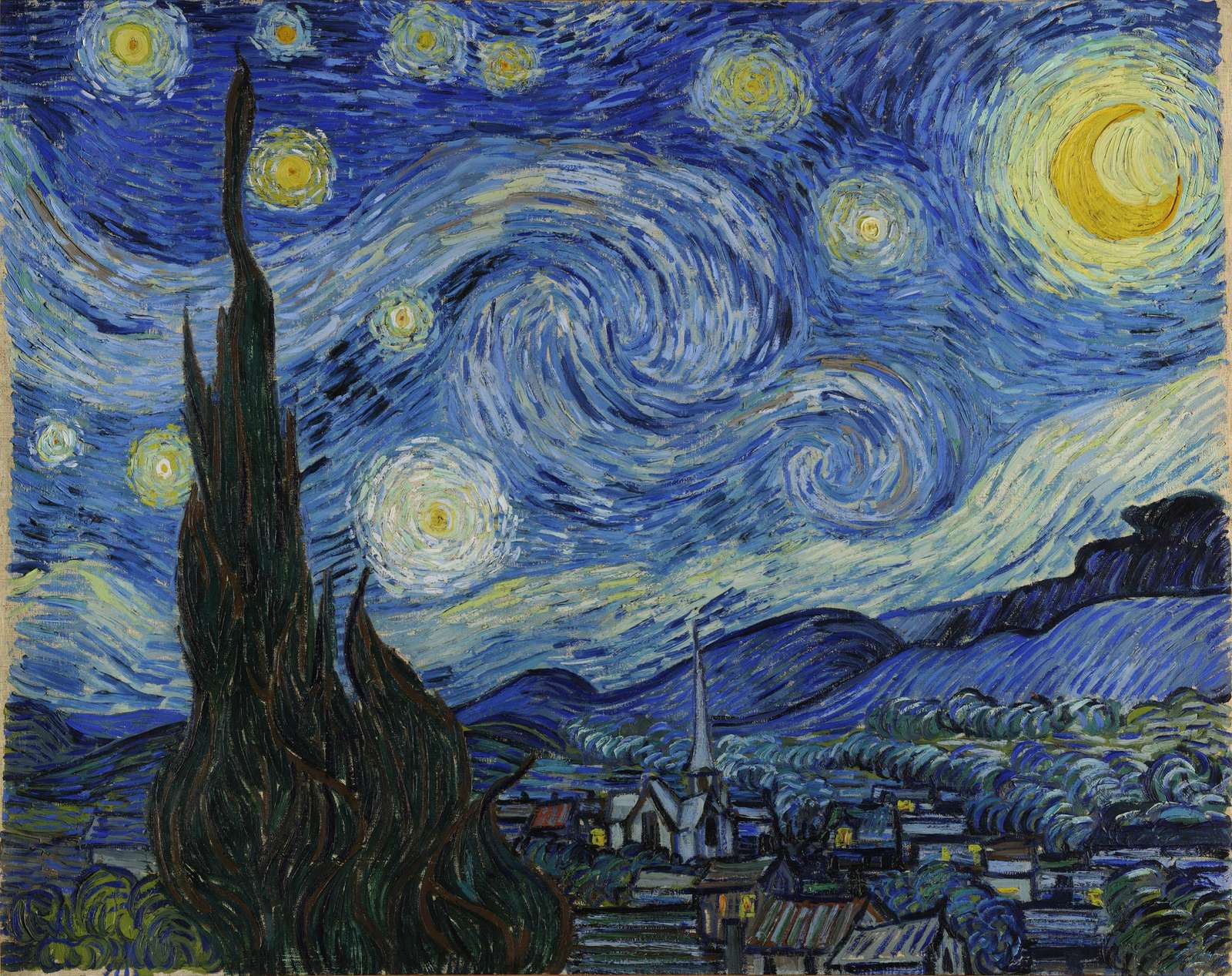
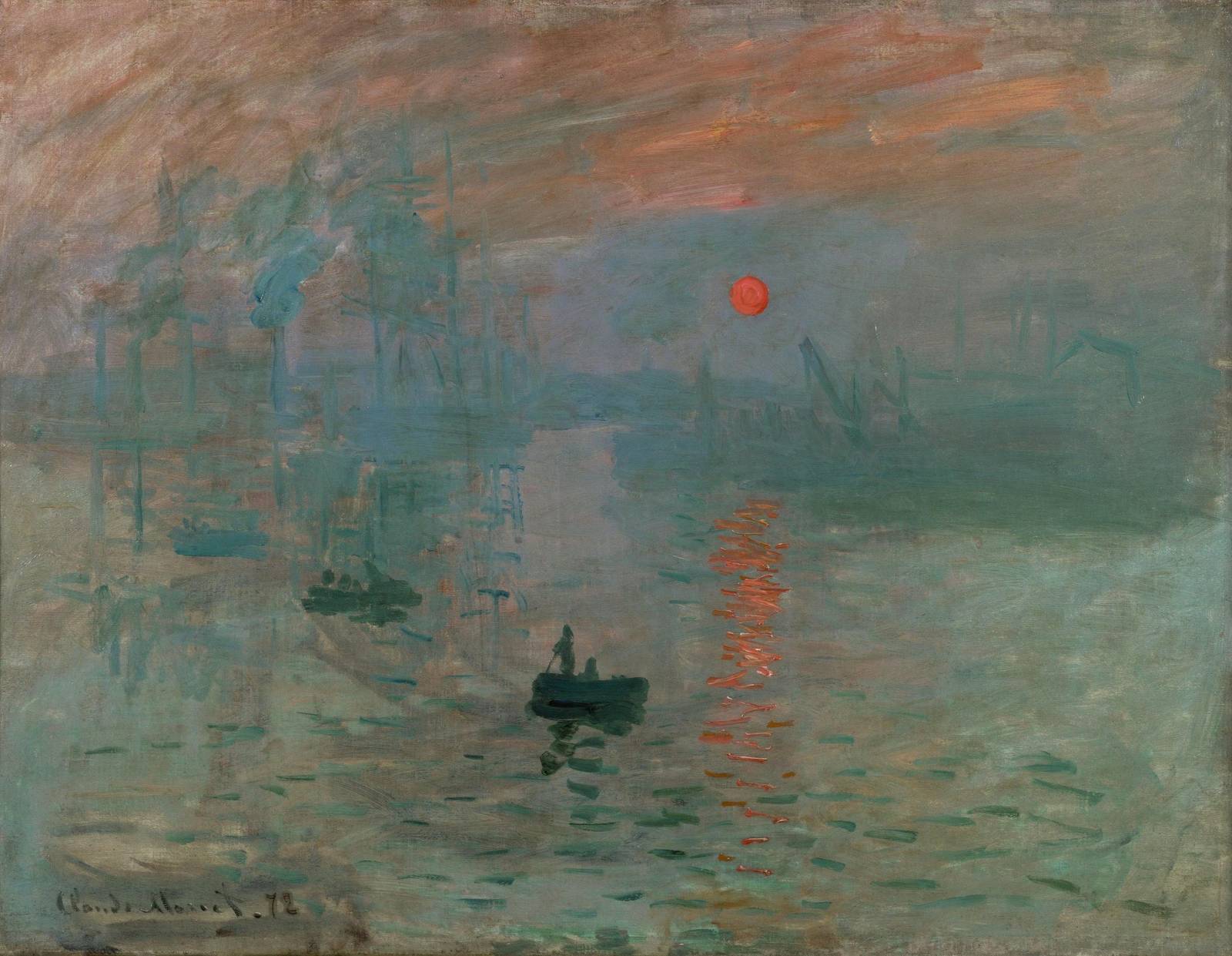
Some pictures reward scale. Vincent van Gogh’s The Starry Night (1889), at the Museum of Modern Art in New York, is all swirling brushwork, and the Large size lets the movement of the sky read from across a room. Claude Monet’s Impression, Sunrise (1872), the harbor scene at Le Havre that gave Impressionism its name, is spare and atmospheric; it works beautifully at Medium above a desk or bed, where it can be seen up close.
As a general guide, busy, detailed compositions such as city views, maps and crowded interiors benefit from the Large size, because the detail stays legible from farther away. Simple, quiet images such as a single flower, a seascape or a portrait hold up well at Small or Medium. Grouping two or three Smalls of related works can also have as much impact as one Large print.
Choosing a frame: Wood Ornament or Black Metallic
FrameAnyPhoto offers two frames. The Wood Ornament frame is a gilded, ornamented frame in the spirit of the ones you see in a museum gallery. It flatters old master paintings, nineteenth-century landscapes and anything with warm color: a Friedrich, a Constable or a Hudson River School view. It is the natural choice if you want a painting to look like a painting, and it adds warmth to rooms with wood furniture or traditional décor.
The Black Metallic frame is slim and modern. It suits photographs, space images, vintage posters and maps, and it gives classic paintings a crisper, gallery-like look in a contemporary room. If your home leans toward clean lines, black window frames or a monochrome palette, it will tie a picture to its surroundings rather than setting it apart.
Gold makes a painting look like a painting; black makes almost anything look at home in a modern room.
The Wood Ornament frame is generally offered in Small and Medium, while the Large size usually comes in Black Metallic. The frame choices for each size appear on the work page as you select it.
A short checklist
- Measure the wall and any furniture beneath it.
- Pick the size that comes closest to two-thirds of the furniture width, or that suits your viewing distance.
- Check the exact dimensions on the work page, and try a paper template.
- Choose gold for warmth and tradition, black for crispness and modern rooms.
If you are still deciding on the picture itself, our masterpieces collection is a good place to begin, and the landscapes offer plenty of wide compositions for the wall above a sofa.