
The bedroom is the first room you see in the morning and the last one you see at night, yet it is so often the room with the bare walls. Art for a bedroom has a different job from art anywhere else in the house. It should not shout. It should help the room feel calm, personal and a little bit private, and it should still be a pleasure to look at for the ten-thousandth time. This guide gathers some of the best framed prints for a bedroom from the FrameAnyPhoto collection, organized by mood, with practical advice on size, placement and frames.
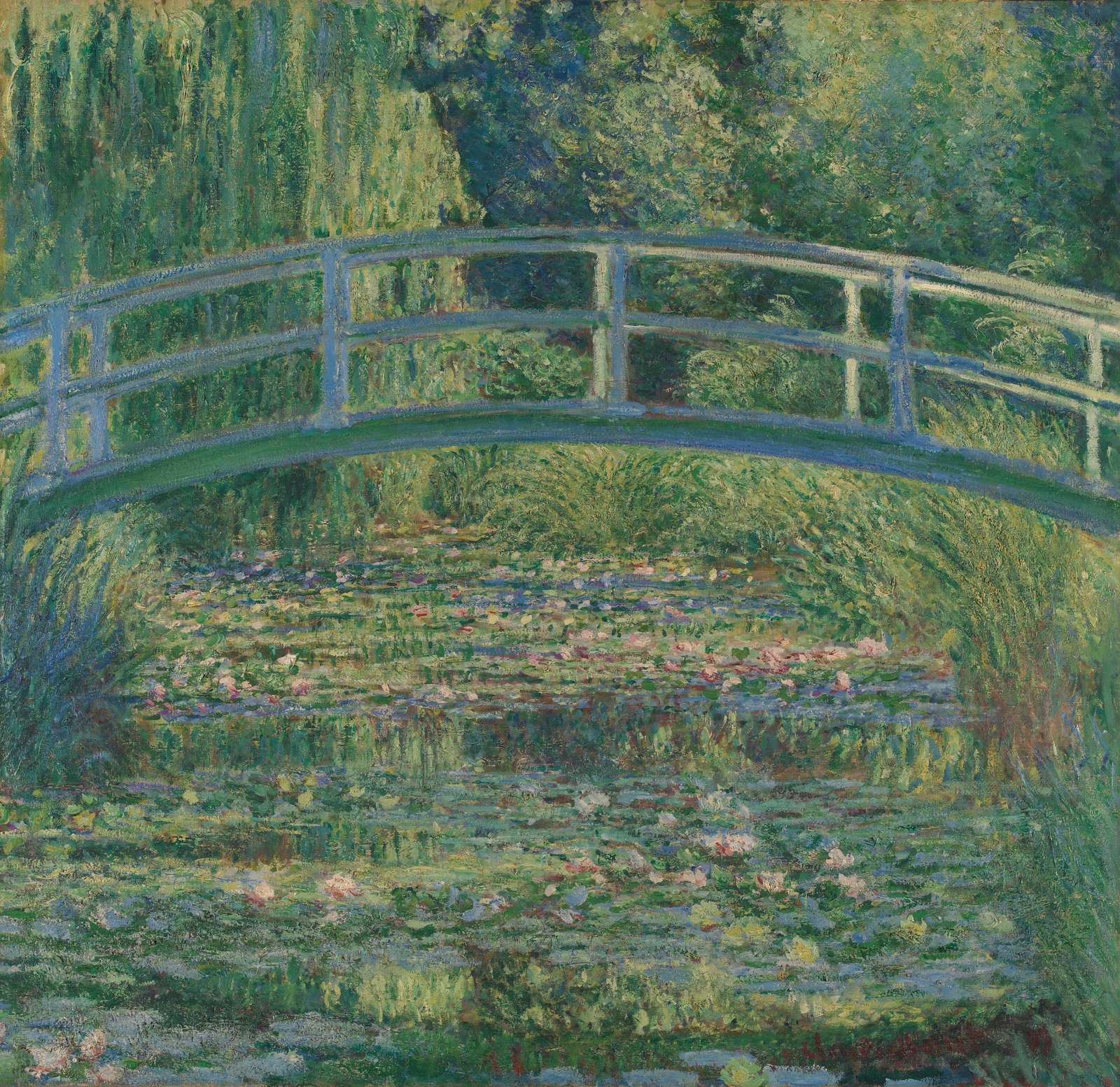
Still water: Monet and the lily pond
Few painters suit a bedroom better than Claude Monet in his garden at Giverny. Monet built his water garden in the 1890s, with a Japanese-style footbridge over a pond of water lilies, and spent the rest of his life painting it. The Water-Lily Pond, painted in 1899 and now in the National Gallery, London, is a picture almost entirely of greens, with the pale bridge floating across the middle. In the later Water Lilies of about 1922, the bank and sky disappear and there is only the surface of the water, lilies and reflections. Both are nearly square, which makes them easy to hang above a nightstand or a narrow dresser. Our earlier story on Monet at Giverny tells the story of the garden in more depth.
Bedroom art should not shout. It should be the quiet thing you are glad to see first thing in the morning.
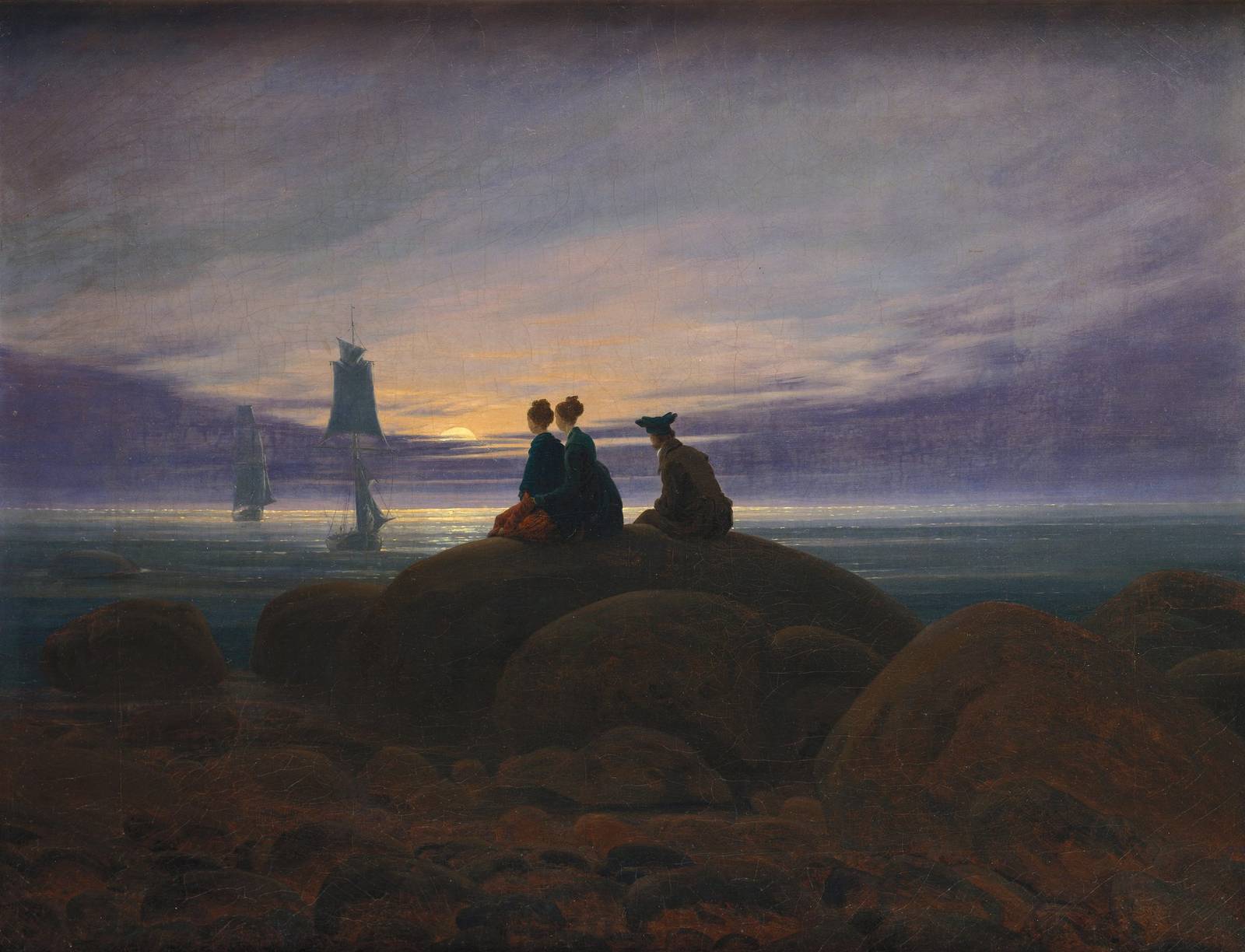
Moonlight and night skies
Night scenes are a natural fit for a room made for sleeping. Caspar David Friedrich’s Moonrise over the Sea, painted in 1822 and now in the Alte Nationalgalerie in Berlin, shows three figures sitting on rocks by the shore, watching the moon come up as sailing ships return home. It is one of the most peaceful pictures of the Romantic era, all soft violets and silver. Winslow Homer’s Kissing the Moon, from 1904 and now at the Addison Gallery of American Art, is livelier: three men in a small boat ride the swell while the crest of a wave seems to touch the full moon. Hermann Herzog’s Twilight over a Lake, from 1885, catches the last glow of the day beneath heavy clouds above a still lake.
And then, of course, there is Vincent van Gogh. The Starry Night is the most famous night sky in art, and its deep blues are surprisingly restful on a bedroom wall. For something more literal, his painting of The Bedroom in his Yellow House in Arles, painted in 1888, is the picture he described to his brother Theo as being about rest. You will find more in our moonlight paintings collection and in our new guide to Van Gogh’s paintings.
Quiet lakes and soft shores
Landscapes with still water and wide horizons help a small room feel larger. Joseph Wright of Derby’s Lake Albano, painted around 1790 and now in the Yale Center for British Art, looks across a volcanic lake in the hills outside Rome in soft, golden light. Worthington Whittredge’s Second Beach, Newport, from around 1878 to 1880 and now in the National Gallery of Art in Washington, is a pale, airy stretch of sand and gentle surf under summer clouds, just right for a coastal bedroom or a guest room. Browse our lake paintings for more calm water.
Gentle Impressionist moments
Paintings of everyday life have an intimacy that suits the most personal room in the house. Berthe Morisot’s Summer’s Day, painted in 1879 and now in the National Gallery, London, shows two young women in a rowboat on the lake in the Bois de Boulogne in Paris, painted with quick, feathery strokes. Mary Cassatt’s The Cup of Tea, from around 1880 and now in the Metropolitan Museum of Art, portrays her sister Lydia in a pink dress, sitting in an armchair with a teacup. Both bring soft pinks, creams and blues that work well with linen bedding and warm wood. For a floral touch, a Redouté cabbage rose makes a delicate, small-scale picture beside a dressing table. See our Impressionist paintings for many more.
Where to hang it, and what size to choose
The classic spot is above the bed. As a rule of thumb, choose a picture, or a pair of pictures, about two-thirds the width of the headboard, and hang it so the bottom of the frame sits roughly eight to ten inches above the top of the headboard. For a queen or king bed, a single large horizontal print works well; for a twin or a narrow guest bed, a vertical print or two smaller pictures side by side can look better. Remember that a frame above a bed should be securely hung, with two hooks rather than one.
The wall you see from the bed is just as important. This is the picture you will look at while you wake up, so it is a good place for the work you love most. Hang it with its center at about 57 to 60 inches from the floor, the same height as in a gallery. A smaller print above a dresser or nightstand should relate to the furniture beneath it, roughly half to two-thirds of its width.
Every FrameAnyPhoto print comes framed and ready to hang in three sizes, at $195, $295 and $395, and each work is printed at its true proportions, so nothing is cropped. For a bedroom, the gilded Wood Ornament frame gives Monet, Morisot and Cassatt a warm, traditional feel, while the Black Metallic frame suits night scenes and a more modern room. Our guide to choosing the right size and frame has more detail.