The Ninth Wave
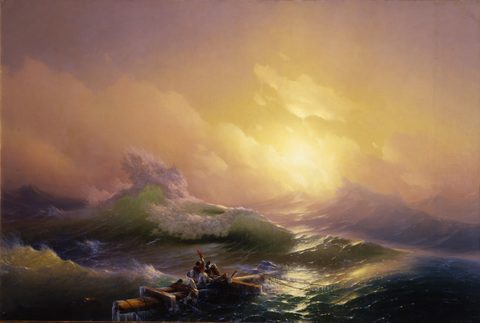
Ivan Aivazovsky, 1850
Sailors cling to a mast after the wreck. The wave that comes when you think you have survived. Dawn is pink. The sea is not done.
About this work
The Ninth Wave is an 1850 painting by the Russian marine painter Ivan Aivazovsky, and his best-known work. The title comes from an old sailors' expression for a wave of enormous size that follows a run of steadily larger ones. The scene is the sea after a night storm: survivors of a shipwreck, facing death, cling to the debris of their ship as the waves keep coming. The wreckage forms the shape of a cross, which has been read as a Christian symbol of salvation. Aivazovsky saturates the large canvas with warm colour and light, which softens the menace of the sea and makes survival seem possible, so the picture holds both the violence and the beauty of nature. Aivazovsky was born in 1817 in Feodosia, Crimea, to an Armenian father. The painting belongs to the State Russian Museum in Saint Petersburg.
Sources: Wikipedia · Wikimedia Commons
Print facts
- Native resolution
- 5,090 × 3,420 px
- Sharp at 150 ppi up to
- 33 × 22 in
- Sizes
- Small (20 × 13 in) · $100 · 254 ppi
Medium (24 × 16 in) · $150 · 212 ppi
Large (36 × 24 in) · $300 · 141 ppi - Price includes
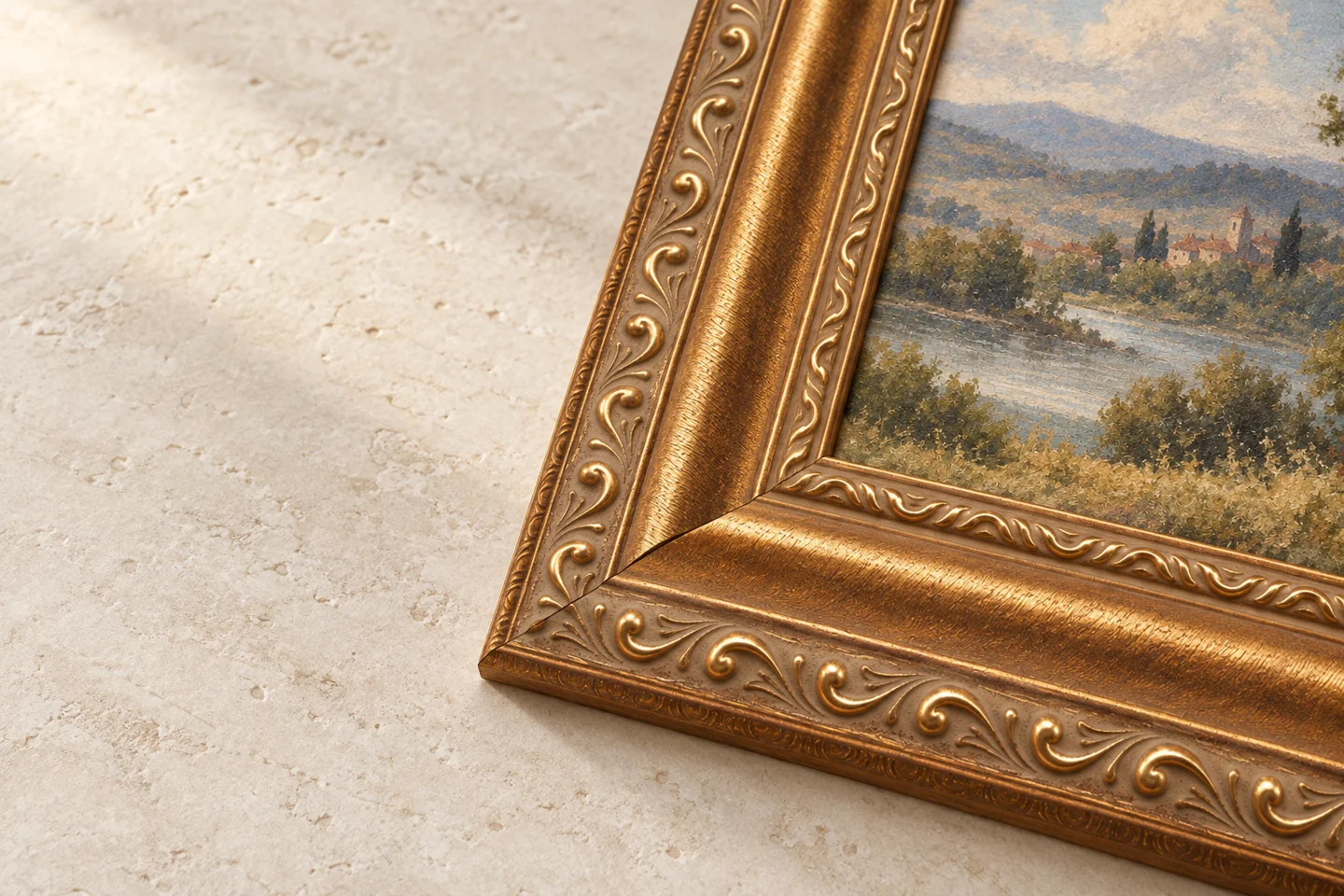
- Frame and US shipping · 14–21 days · 30-day returns
FAQ
Where can I buy a framed print of The Ninth Wave?
Here. The Ninth Wave is available as a framed print in three sizes: Small (20 × 13 in) for $100, Medium (24 × 16 in) for $150 and Large (36 × 24 in) for $300. Prices include the frame and US shipping; delivery takes 14–21 days, with 30-day returns.
What size works best for The Ninth Wave?
The file is 5,090 × 3,420 px. Medium (24 × 16 in) is the largest size that prints at 150 ppi or more (212 ppi), the sharpest choice for close viewing; Large (36 × 24 in) prints at 141 ppi, fine from a few feet away but softer up close.
Is it legal to print The Ninth Wave?
Yes. The Ninth Wave is in the public domain: its copyright, if it ever had one, expired long ago. In the United States a faithful photograph of a public-domain painting does not create a new copyright (Bridgeman v. Corel, 1999), so the image can be printed and sold freely.