
Guide
How to choose a print and frame size
Most framed art that looks wrong on a wall is the wrong size, and usually too small. Measuring first takes a few minutes and saves a return.
This guide explains how to pick a size for a particular wall, what our three sizes are, and how the shape of a picture changes the answer. If you just want a number, the wall size calculator takes your sofa or wall width and recommends a size.
Our three sizes
Every work is printed and framed to order in up to three sizes, named by the long side of the printed picture. The short side follows the picture's own shape, so a square photograph and a wide panorama at the same size share a long side but have very different heights. Prices include the frame and shipping within the US.
| Size | Long side | Framed, shipped | Works offered |
|---|---|---|---|
| Large | 36 in | $300 | 935 |
| Medium | 24 in | $150 | 1,128 |
| Small | 20 in | $100 | 1,140 |
Measure, then take two-thirds
Measure the piece of furniture the picture will hang over (a sofa, bed, sideboard or fireplace), or the width of the wall if nothing is below it. Art looks settled when it spans about two-thirds of that width.
Over a 60-inch sofa, two-thirds is 40 inches, so Large, with its 36-inch long side, is the closest fit. On a 36-inch-wide wall, two-thirds is 24 inches, exactly Medium. When two-thirds comes out much wider than 36 inches, a pair often looks better than one print: over an 84-inch sofa, two Medium prints with a 4-inch gap come to 52 inches, and a 120-inch wall can take two Large prints at 76 inches across.
Mind the height
Width is not the only limit. On a short wall, such as the strip above a kitchen counter or under a sloping ceiling, keep the picture's long side under about half the wall's height. A 40-inch-high space above a counter allows about 20 inches, which is Small, even though its width would take more.
Leave about 8 to 10 inches between the top of a sofa or headboard and the bottom of the frame. On an open wall, aim the centre of the picture at about 57 to 60 inches from the floor, the height most galleries use, and allow for the frame, which adds its own width on every side.
Room by room
Hallways, bathrooms, the wall beside a door and the space above a desk usually suit Small. Over a dresser, a console table, a single bed or a small fireplace, Medium is the usual fit. Over a sofa, a queen or king bed, a sideboard or a wide fireplace, choose Large or a pair of Medium prints.
Stairwells and tall open walls can take Large, often as a pair or a row of three. For a gallery wall of mixed sizes, start with one Large or Medium anchor and build around it with Small prints, keeping the gaps between frames even.
Pairs and rows
A pair or a row of prints is the easiest way to fill a wall wider than one Large print. Use the same size and the same frame for every piece, hang them at the same height and keep the gaps equal; about 4 inches between frames reads as one group rather than separate pictures.
To work out the width, add the prints and the gaps. Two Medium prints with one 4-inch gap come to 52 inches; three Medium prints with two gaps come to 80 inches, about right over a long sectional or a wide sideboard. Pictures that belong together hang best as a set: a painter's series, two views of the same place, or two photographs from the same mission.
Wide, tall or square
Because the short side follows the picture, the shape of the work matters as much as the size name. A wide painting such as Frederic Edwin Church's The Heart of the Andes is 36 by 20 inches at Large, long and low, which suits a sofa or a sideboard.
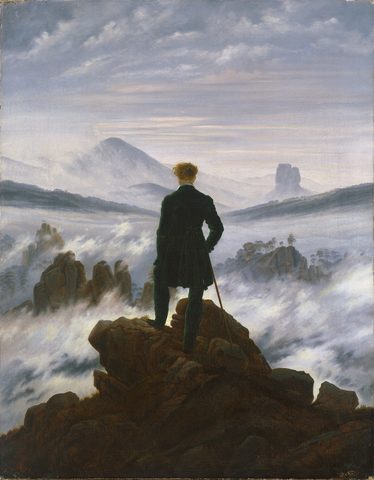
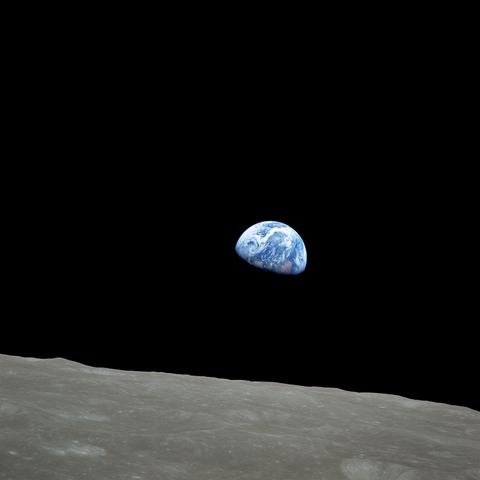
A tall picture such as Caspar David Friedrich's Wanderer above the Sea of Fog or the Webb telescope's Pillars of Creation stands 36 inches high at Large, better on a narrow wall, between windows or at the end of a hallway. Square images such as Earthrise and the Blue Marble 2012 fit almost anywhere. Every work page lists the exact printed size of each option before you add it to the cart.


Why some works stop at Medium or Small
A size is only offered when the scan has enough pixels to print sharply at it, at least 100 pixels per inch. Most of the collection goes to Large, but some older or smaller scans don't, so they are offered at Medium or Small only; the table above shows how many works offer each size today.
If you want something big, the print-big guide ranks famous paintings by how large their files stay sharp, and the Hudson River School and Yosemite paintings collections are full of large museum scans.
Choosing the frame
There are two frame styles. Black Metallic, the default, goes with almost anything and suits photographs and modern rooms. Wood Ornament is an ornate antique-gold frame that suits traditional rooms and nineteenth-century paintings. Both are included in the price, and every print is on matte cotton paper.
If you are still between two sizes, go larger: a picture slightly too big for a wall rarely looks wrong, and one too small usually does. For ideas about what to hang, read the best framed art for a living room.